Harvest Bins


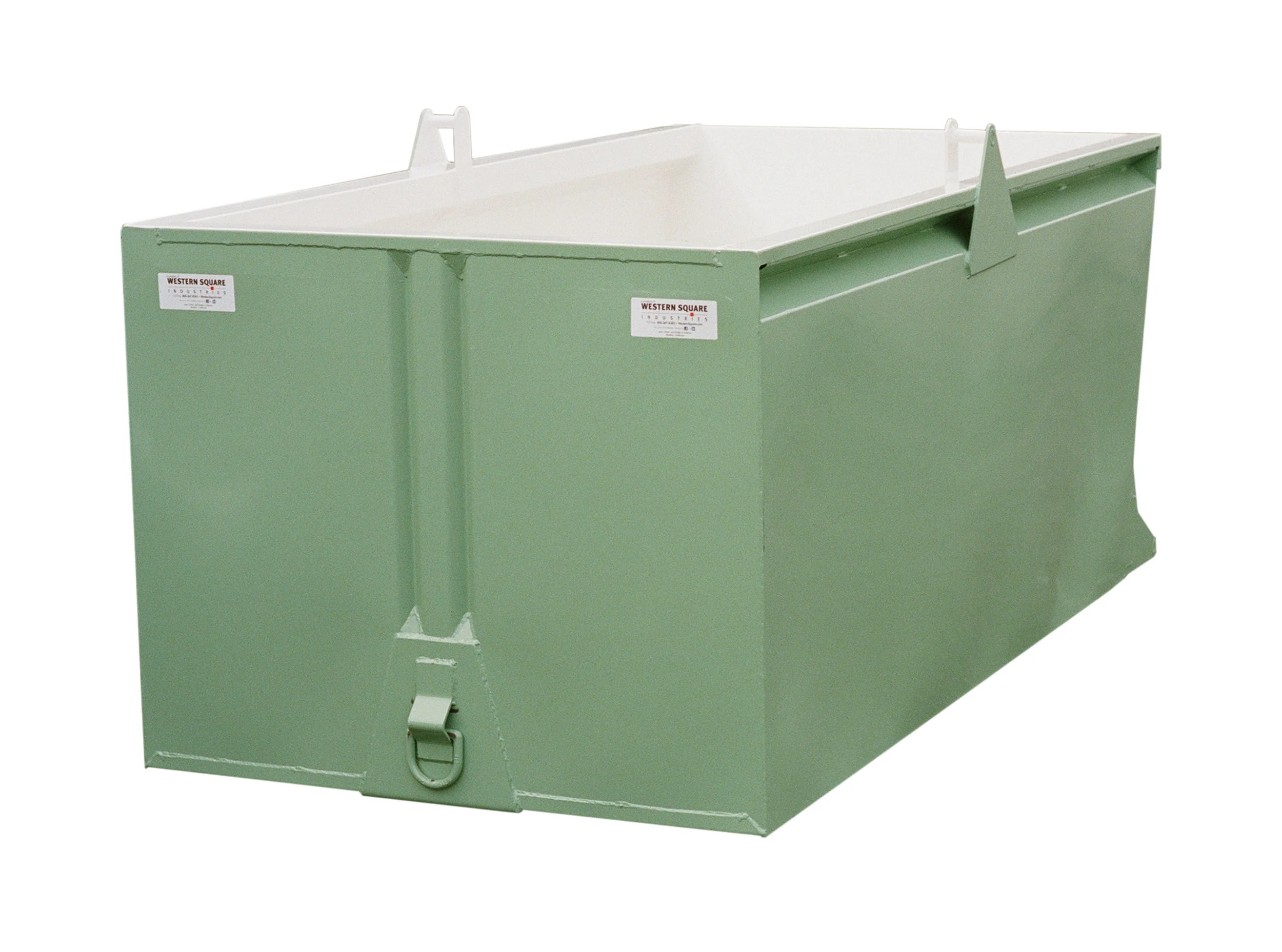
Although interchangeable with Valley bins from other manufacturers, Western Square’s Two-Ton Bin has features that have earned it the reputation for the best-designed bin in the industry.

The D-ring end is ribbed so that the stress from lifting a full bin is distributed over the entire height of the bin, not just the D-ring itself.

The top rail is formed to provide excellent rigidity and dimensional stability. The charnel on the outside of the rail is blocked to prevent the hooks of the gambrel from catching.

Sidewalls, end walls and bottom sections are lapped, so that welds are on flat surfaces, not on edges or corners.

These features give Western Square’s Two-Ton Bin the strength and dimensional stability needed for years of trouble-free use, but without added weight. Manufactured of 14-gauge steel, Western Square’s bin weighs only 435-440 pounds. The outside dimensions are 8’ x 4’ x 4’.

Western Square is the only manufacturer to use powder coating (baked enamel) to coat steel bins. The inside coating of the bins is FDA-approved food grade epoxy powder coating in a choice of white or gray. The outside coating is exterior grade polyester powder coating, which is available in several colors. These bins are also available in stainless steel. (See below)

A. Forged D-Ring (rated at 20,000 psi) mounted on ribs, spread the stress of hoisting over a maximum area.

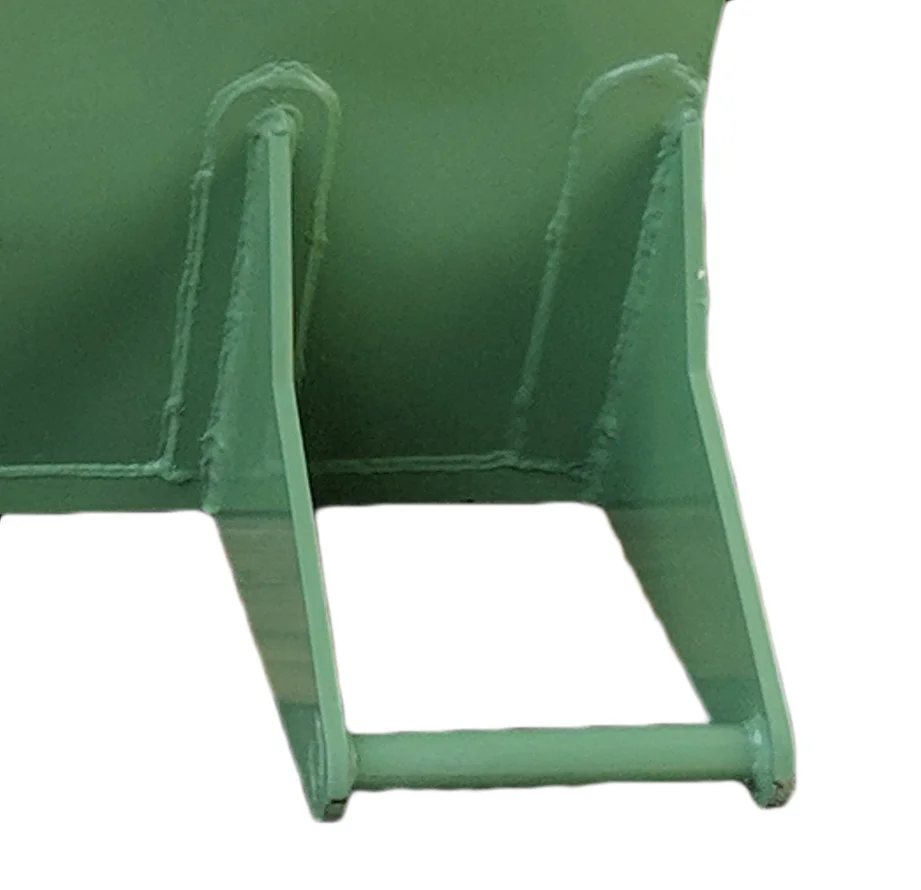
B. Lifting pins and pivot pins welded to triangular shaped plates for maximum strength.
C. Sides of bin are made with roll-formed steel, requiring no welds on inside, which offer a smooth surface for best grape release.

D. “Thru-holes” design. Pins welded on both sides of each plate. (Not butt-welded).

Picture of Double Bar Rack

Stainless steel provides a bin that is both extremely durable and easily maintained. The bin retains its clean, attractive look throughout its lifetime.

Powder coating is the most durable finish available. It is resistant to chipping, abrasion, impact, corrosion, chemicals and weather. Powder coating is the process in which the coating is applied dry instead of wet. The dry powder, with a consistency like talcum powder, is applied with a special spray gun which charges each particle electrostatically so that it will stick when it hits the metal surface.

The steel is later conveyed into a 400 degrees oven where the powder particles melt, flow and fuse, a process that can take up to 45 minutes. This process of coating steel provides dramatically better corrosion resistance than conventional painting methods.

© 2007 www.westernsquare.com